


We’ve just launched a new version of Fyxer, which took:
10,000+ lines of code
A new design system
A code refactor
New pricing model
Migration of old users to the new product
Wow. I’m actually quite stunned at what’s been shipped in the time.
Here’s the story on why we needed to ship something new, how we pivoted fast and some big learnings I’ve had along the way.
What signals showed us it was time.
In the old days a product strategy would last for a year, at worst half a year. There were more ways to build a business that’s defensible and has a moat.
These days, you create a strategy (why you’ll win, what you’ll build, how you’ll solve a customer problem better than the rest), and within a few months it needs refreshing.
For Fyxer, 2026 was the year where we were the AI email assistant. But a lot has changed since then: there’s more competition and our core features (drafting, note taking) became commoditized*.
*Commoditized means when a feature stops being a reason to pick you. Everyone has it, it’s cheap to build and so customers just expect it. It’s no longer their reason to buy.
So we looked at four things:
What our customers are still struggling with, despite all the AI tools (pains, gains, jobs-to-be-done)
What sales and success say customers are crying out for
Our data (churn reasons, where customers are going, growth rate)
Market movements (who’s getting funding, what propositions are selling)
The bet
The same thing kept coming up: despite AI, people are still overwhelmed. And when overwhelm hits, people lose track of what they’d promised.
We asked: if Fyxer is an AI assistant, what do the best assistants do?
A great assistant has your back: they remember what you forgot. When you multiply that across a team, you have a unit that works well together.
The new Fyxer keeps track of your team’s commitments across email, meetings, Slack and your other tools. It’s built for when you’re waiting on a colleague for something, or when a client changes hands and the history gets lost, or even when you have that nagging feeling you’ve forgotten something, but you can’t think what…
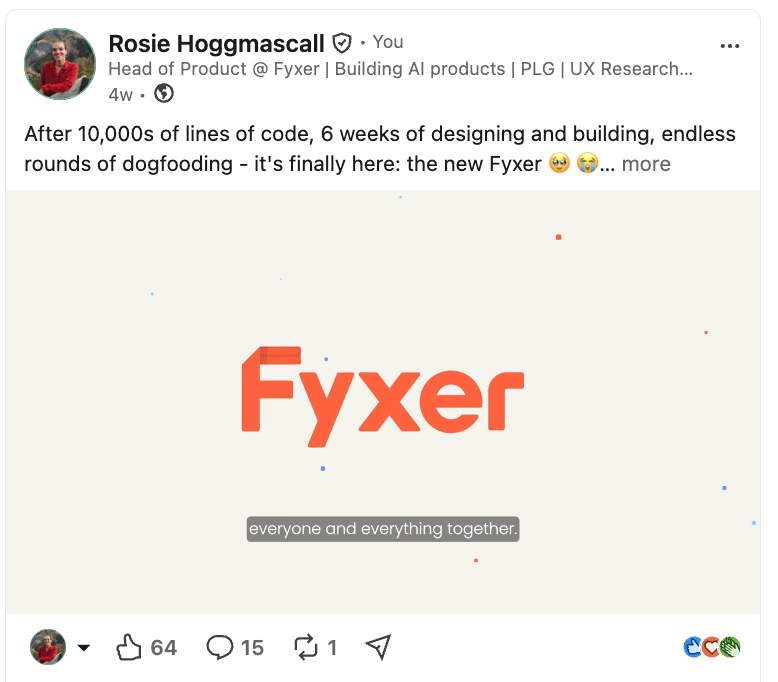
Here’s our launch video in action woop!
That’s the bet.
The big learning curve for me was the execution, and how AI let us get this out the door so fast.
How we managed to launch in 6 weeks instead of 6 months
In the old days (i.e. 2025 or earlier), engineering was the bottleneck. Builds took weeks, sometimes months.
It meant it was easy to say ‘no’ to building something and prioritization was more ruthless. It also meant that product and marketing had time to think: craft the copy, the design, the roll out plan, the positioning and to think ahead about the next thing.
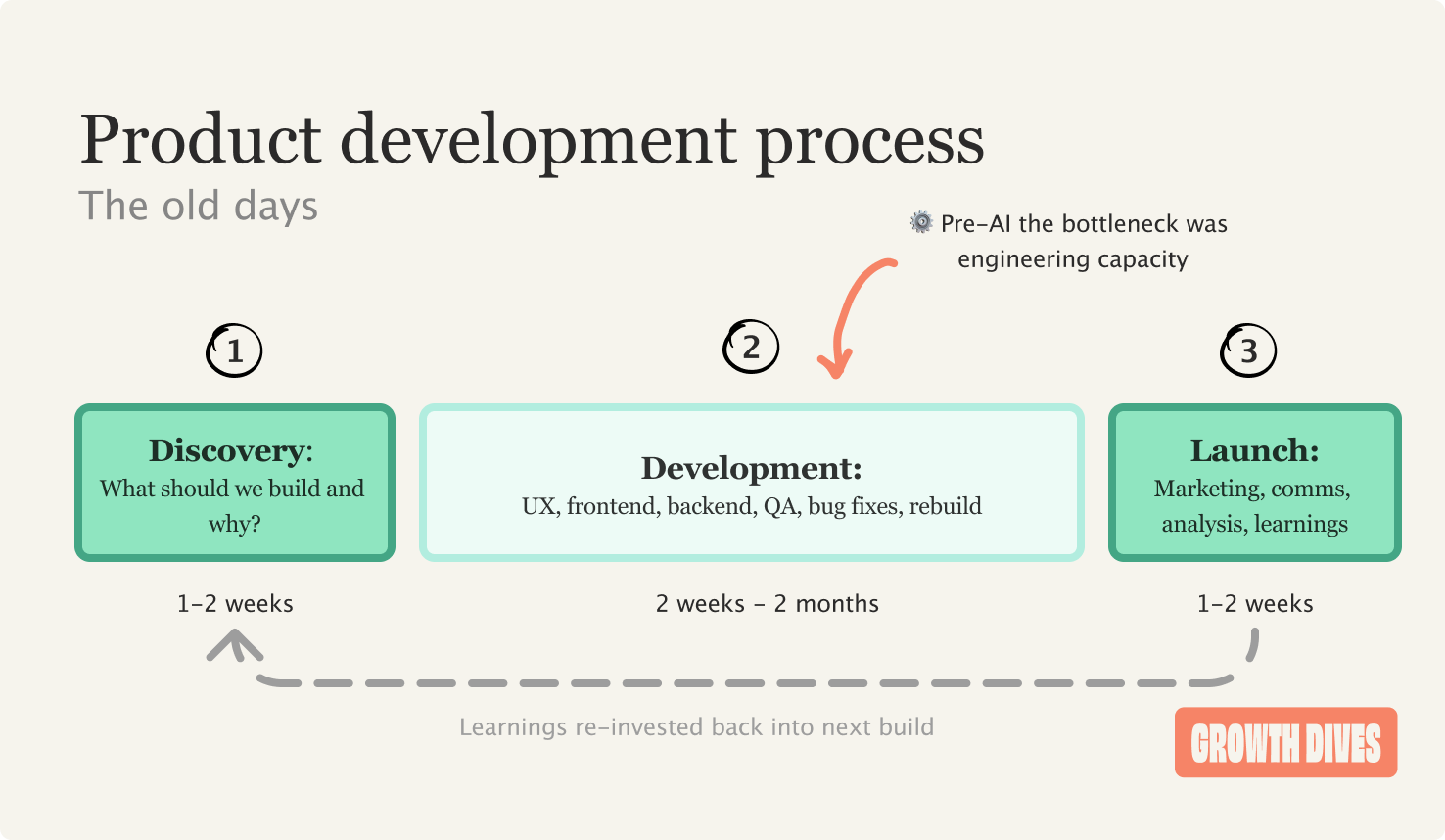
I remember I used to think in engineering weeks and months. Now it’s days.
We built full onboarding flows in a few days. We did a code refactor in 3-4 days that would once have taken 8 months. We’ve shipped more code in the last six weeks in the whole of last year.
So the bottleneck has moved. Now we’re waiting on product thinking.
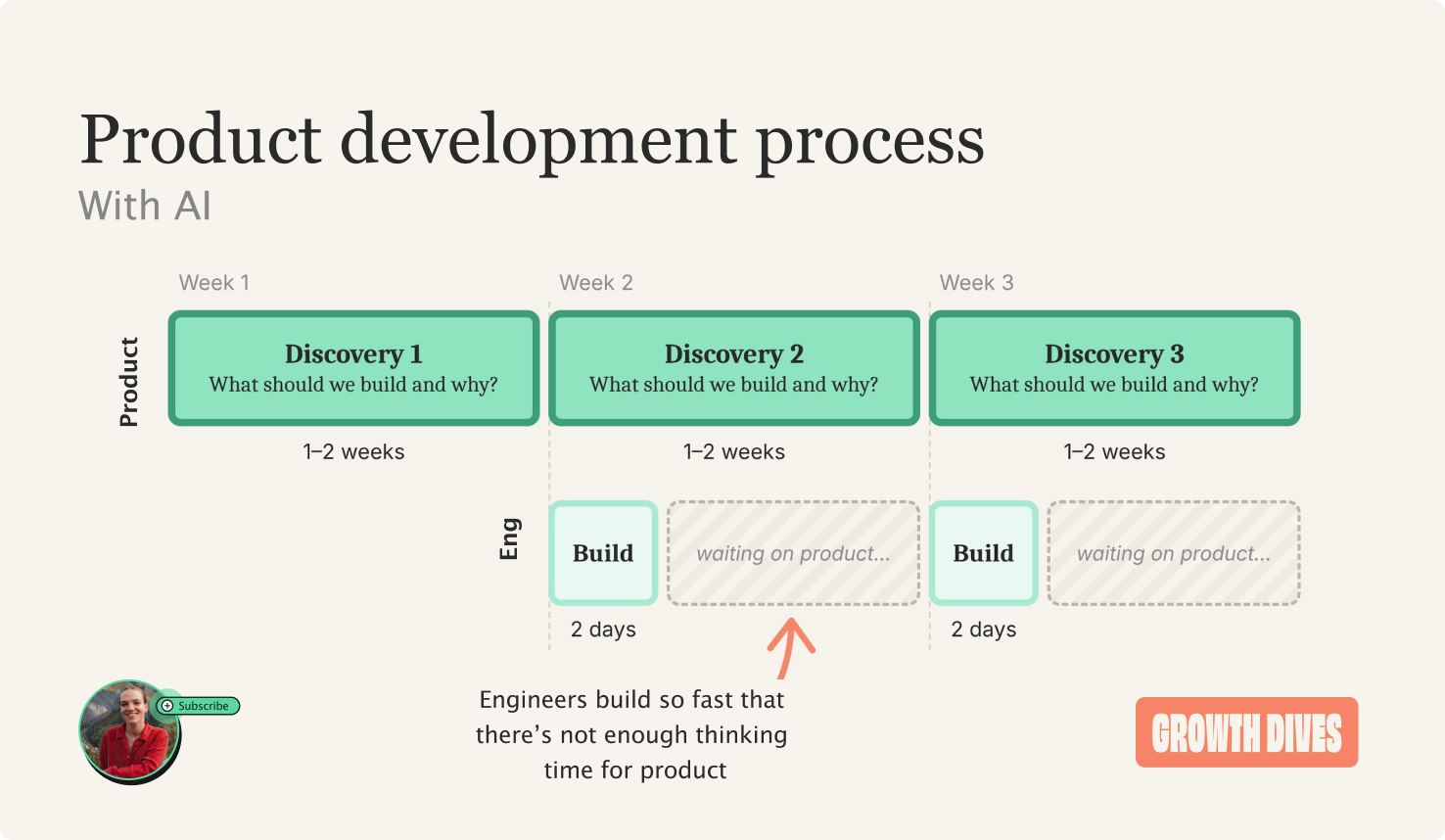
When building is easy “we don’t have time” stops working as a reason to say no. Scope creeps.Tons of new things are being launched faster than ever.. and there’s no time to think between it all.
“But what about continuous discovery, Rosie?” “Shouldn’t all engineers be product engineers?”
Yes, theoretically. But when you need more answers, faster, they aren’t enough on their own - upskilling takes time. We were still chasing our tails.
So, what’s the solution in this new world?
Fast feedback.
Get things into customers hands ASAP
We swapped too much up front planning for fast feedback. We got a real build in front of people as early as we could to derisk the bets.
First the whole company in dogfooding sessions, then keen customers in betas.
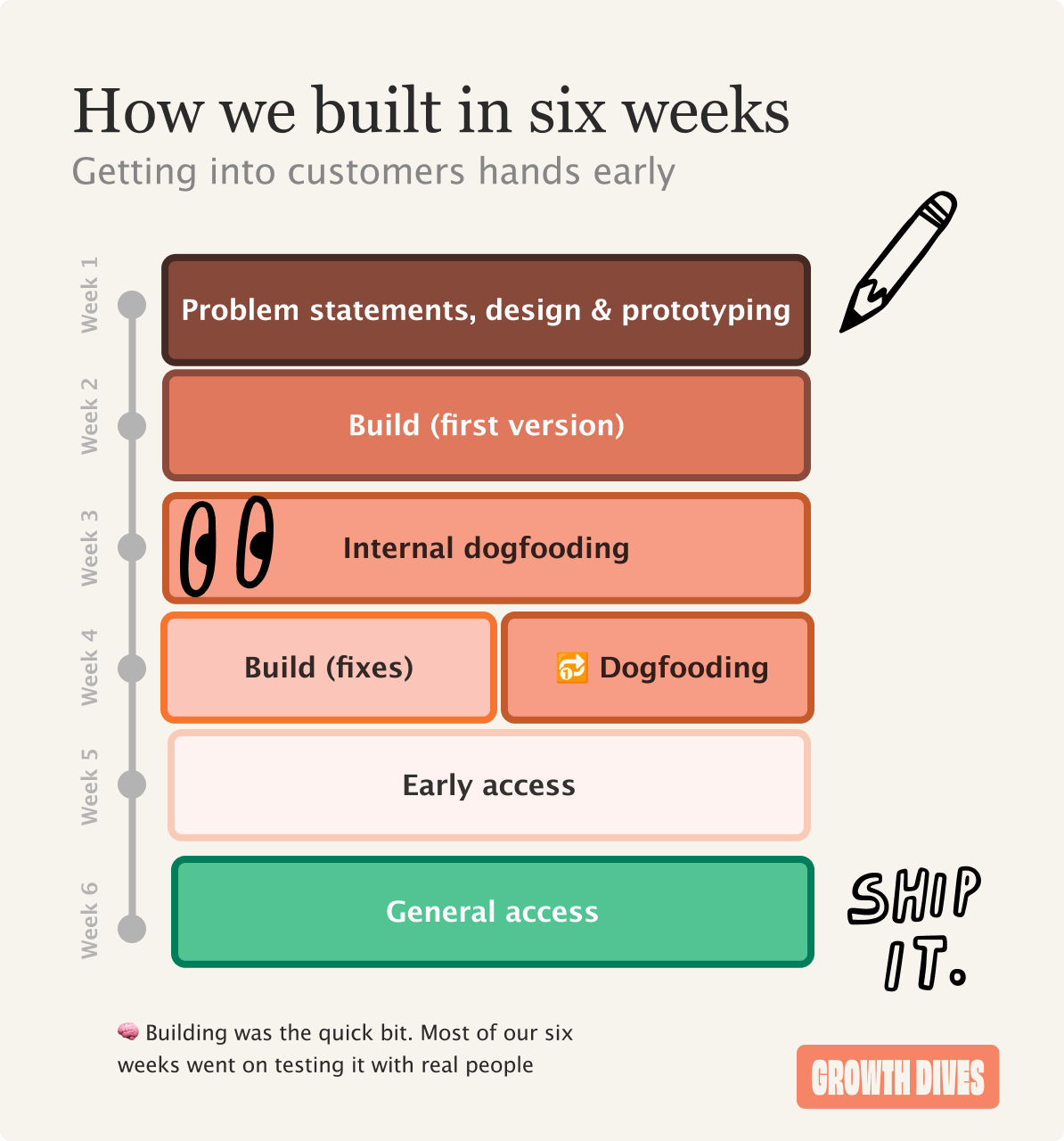
The parts to this process were:
Week 1: Problem discovery & prototyping
We started from the company’s new vision (thanks to our Chief Product Growth Officer, Leah) and built a prototype of the new product. Our challenge was keeping the problem docs up to date. If prototyping comes first, you sometimes backtrack to the documentation, and if the prototype is the only source of truth, it can create misalignment. Plus, scope: it takes a second to add something to a prototype without realising you’ve just doubled the work.
Big learning: even if prototypes are easy to whip up, always start with the problem statement written down somewhere for all to see.
Week 2: Build
Growth engineers took the frontend. Product and AI engineers took the backend. We built a new webapp, new integrations and new agent routines, and changed our tech stack to support it all. The work was so big it cut across squads. We’d only just set up squads, and suddenly we needed them working together all the time. The comms were hard, and so was keeping all the pieces moving together.
Big learning: if you think someone hasn’t talked to someone else, you’re probably right. Go with your gut.
Week 3: Internal dogfooding
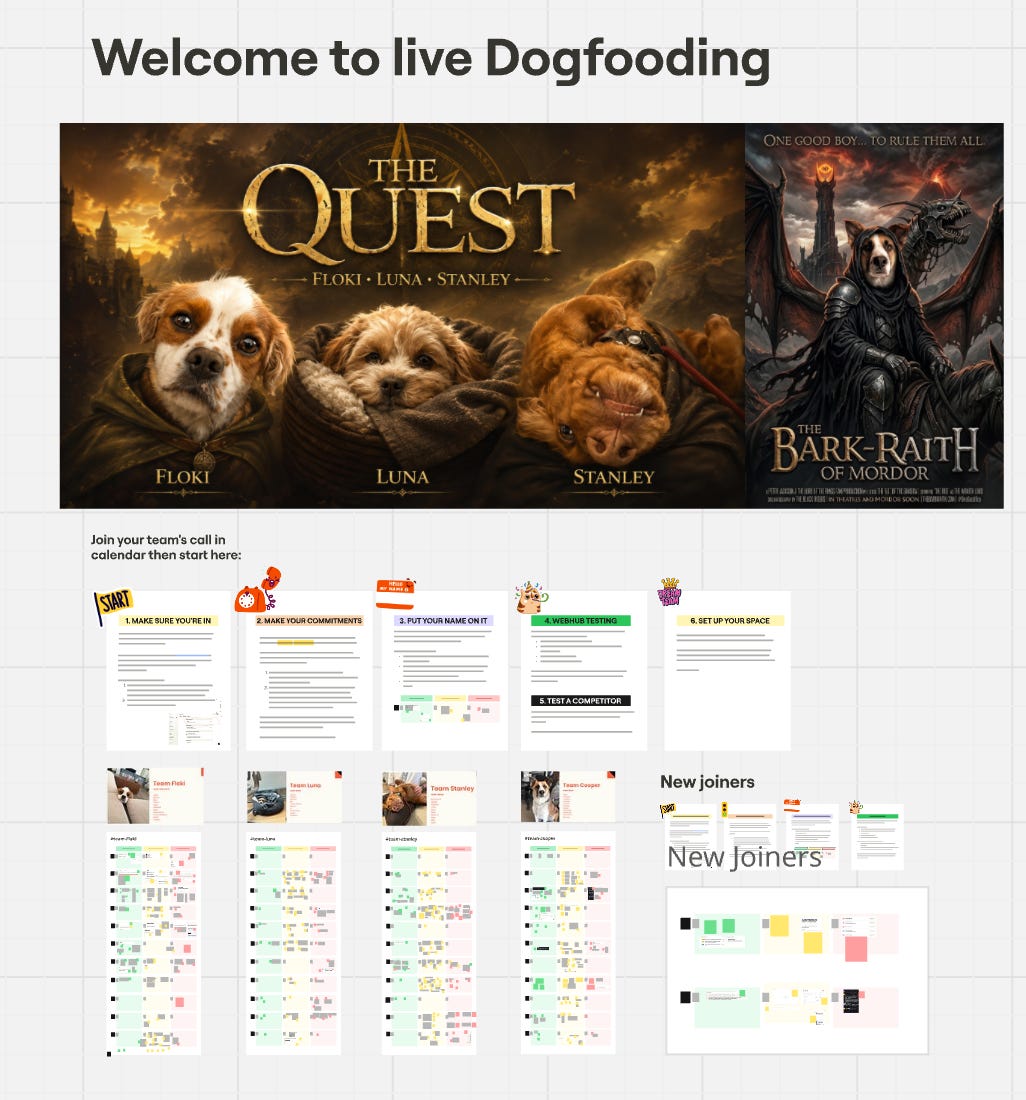
On the Monday, we got the whole company in a room for a full week of role play as our customers, with dog-themed teams, hidden challenges, prizes and more. We got tonnes of feedback and some of it was messy. The hard part was collating it all, deciding what to fix now and what to leave for later.
Big learning: agree your quality bar and qualitative success metrics before the feedback comes in. Otherwise everything feels urgent and people get overwhelmed quickly.
Week 4: Fix and re-dogfood
Engineers got straight to work on the feedback (some was even fixed live during dogfooding calls). Then we ran a fresh round of dogfooding on the fixed version. With 10,000s of lines of code shipped the challenge was keeping a source of truth on what was live, what was just about to be merged, in what environment and what was still outstanding.
Big learning: at this speed, no one person can see the whole picture. Get your hands on the product and check it with your own eyeballs. Then share what you see: what’s live, what’s half there, and what’s missing - just knowing this is a huge value for the team.
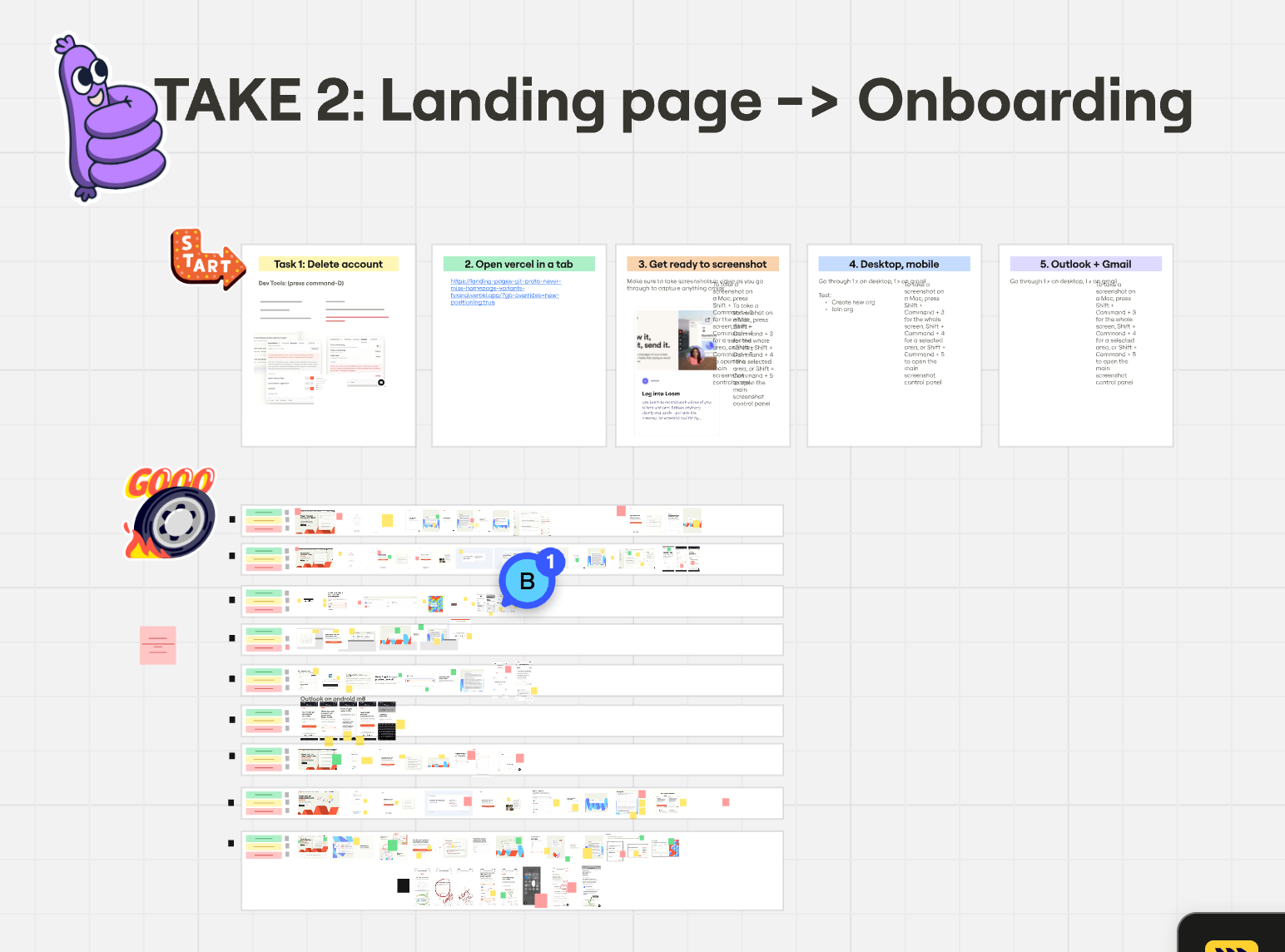
Week 5: Ship it to early customers
Once parts of the product had passed the first quality bar, we shipped it to beta customers. These are people who are happy to work with you on some niggles, and can test part of the full product (e.g. one feature). We had a huge amount of support from sales and product to get keen customers on the new product. Getting calls in the diary at the speed we wanted was a challenge (busy people have less time).
Big learning: line up early customers before the product is ready, they don’t always work on your fast timelines.
Week 6: Make the call for general release
Once everything hit the final quality bar, we made the call to release. Some parts of the product lagged behind (like the new onboarding), they managed to catch up while sales onboarded early users into different features. Once it had all reached the ‘ready’ mark we launched. With so many big changes going into production at once, we went for a soft launch and saved the big marketing push for later, once we’d proven it was stable.
Big learning: release and launch don’t have to happen on the same day. A soft launch prove it’s stable, then the marketing noise can happen later.
And of course, get colleagues to post! Drum up the noise, it makes a difference.
To conclude: what I’d tell myself 6 weeks ago
When building takes days not weeks, product thinking becomes the bottleneck.
Here’s what I’d tell myself 6 weeks ago (and, 6 years ago too):
Write the problem down first, a prototype won’t drive the alignment you need
Guard your scope from last-minute additions
Get a real product in front of people fast
Line up early customers before you need them
Get your success metrics ready early
Check everything with your own eyeballs, no skipping things
Over-communicate across teams. If you think two people haven’t talked, they haven’t
Soft launch to check the infrastructure holds, marketing launch later.
None of these are new. AI just makes them hurt more when you skip them.
What has changed is how often you need stay on the ball in terms of the market. Strategy now needs a refresh every few months, so don’t wait to re-check last quarter’s assumptions: customers, product market fit, the competition. Be vigilant.
And lastly, don’t forget to rest. Because AI hasn’t made things easier, far from it.