


Six months ago, I wrote that the big CRMs were badly designed.
That came after finishing HubSpot’s onboarding and being left with a long list of setup tasks. It felt like I had to put a lot of manual work into legacy CRM systems before I could use them.
But going back to it last week, I realized I was looking at the wrong thing. I was focusing on the onboarding, UI, what the screens looked like.
I wasn’t looking at how you’re actually expected to interact with the product.
When I onboarded with Attio last week, I landed on a completely different home screen to what I’m used to from most CRMs.
It felt different straight away.
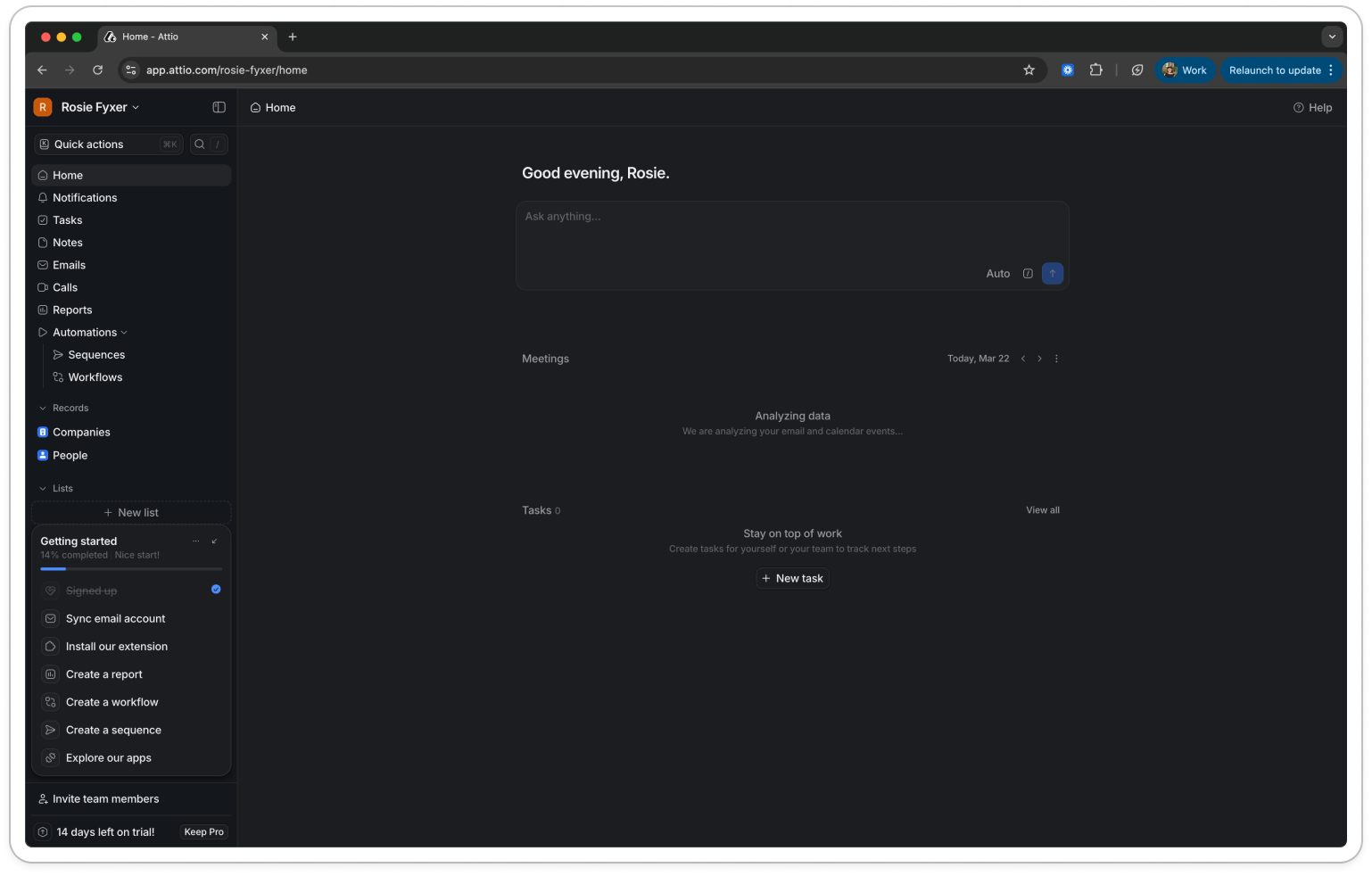
At first, it’s a cold start:
Analyzing data
We are analyzing your email and calendar events…
Then it finishes loading, and I get an aha! moment.
The end of the classic CRM home screen 👋
When my new Attio home screen populates, it’s clear that this is a drastically different format than any CRM has had before.
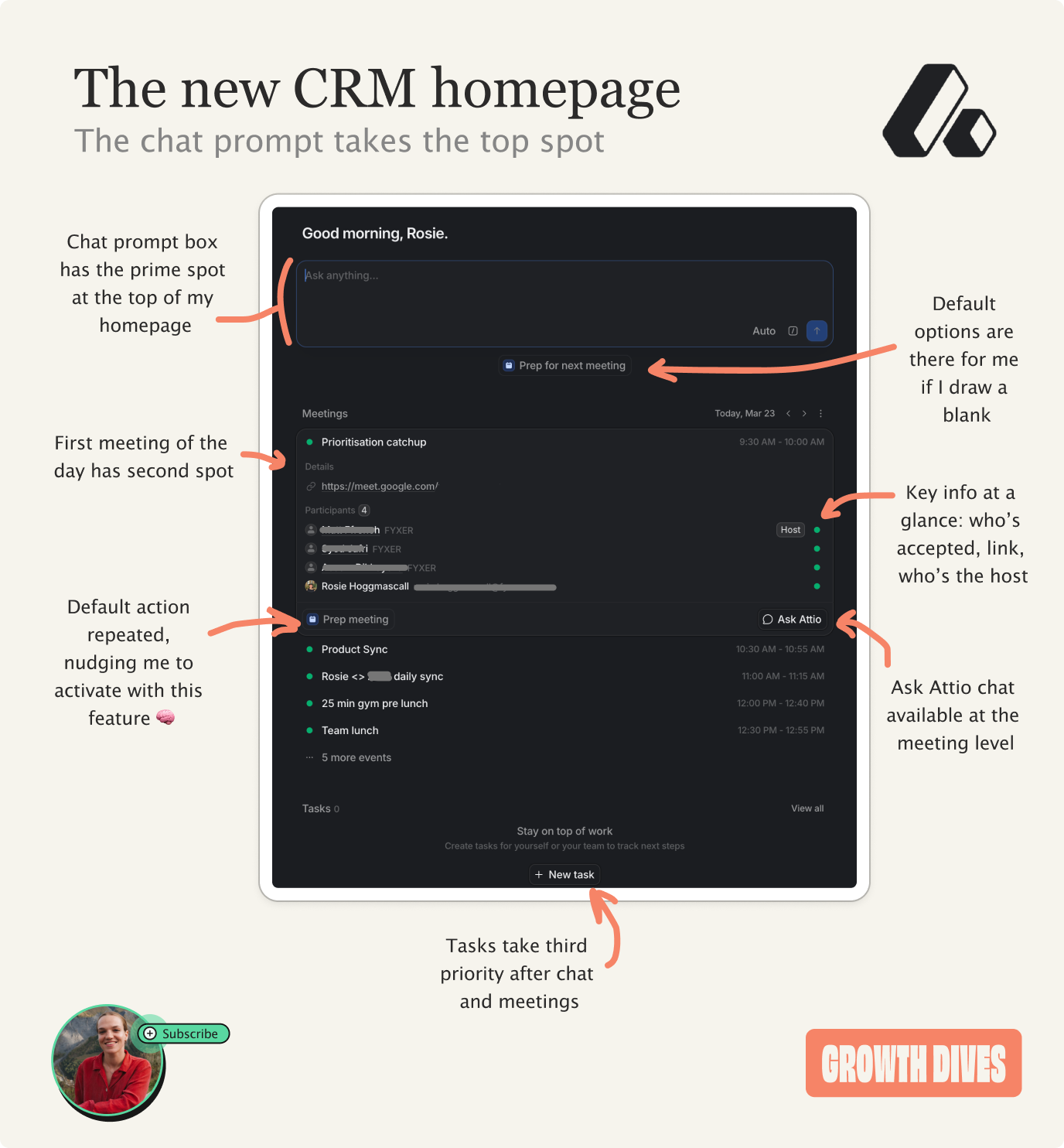
On my new, populated homepage:
‘Ask Attio’ takes the centre stage - a conversational way to work with your CRM
There’s very little content there, different from the normal overwhelm of CRMs
There’s a default prompt options ‘prep for next meeting’ if I’m stuck
My next meeting sits directly below chat, with just enough UI to see who’s coming and grab the link
I can act on it immediately, either by chatting with it or prepping, through two subtle icon buttons
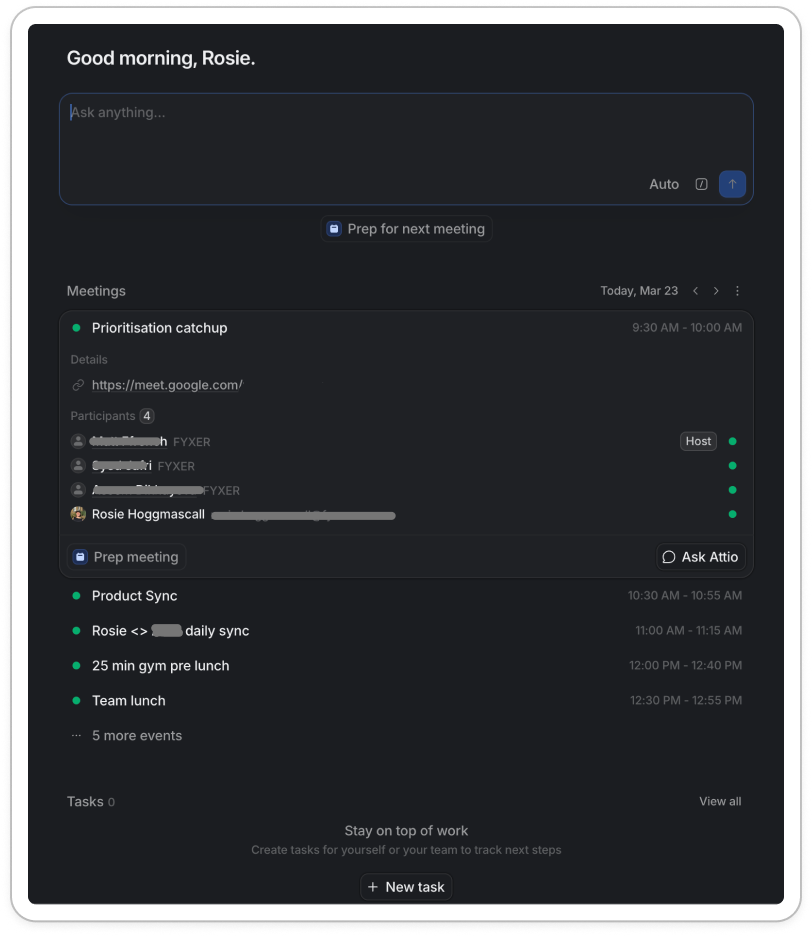
So I try it. I click ‘Prep for next meeting’.
What’s refreshing is that the replies aren’t generic, ChatGPT-style responses. Instead they’re grounded in customer language that the target persona would use day-to-day:
Put together a solid meeting brief
Now let me look up the people records for the key participants to get their roles.
Where we left off
What’s interesting is that instead of leaning too heavily on words, Attio has opted for a mix of UI and button-led design to nudge users in the right direction.
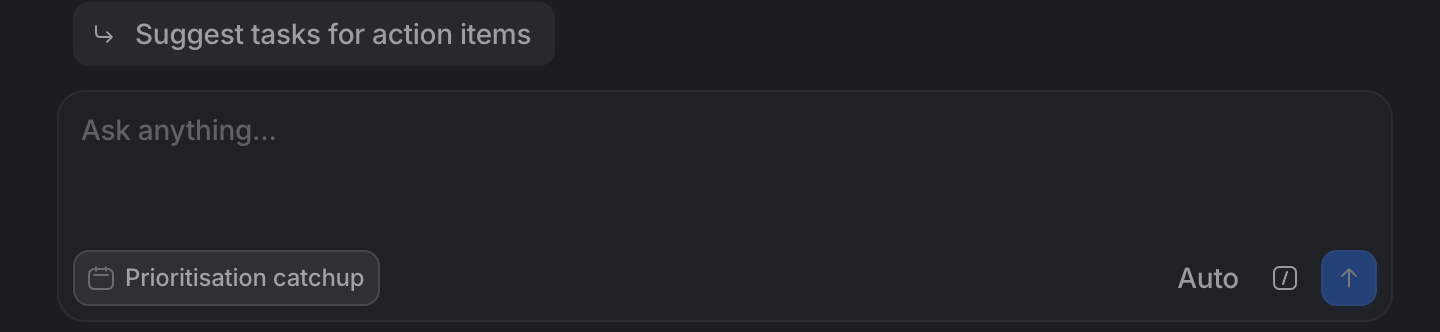
ChatGPT and Claude’s responses are 95% text, whereas with Attio there’s always something to click: a button, or a shortcut.
And if you go further into the Ask Attio experience, at certain moments you’ll be asked if you want Attio to do the work for you:
Update a CRM record (for instance, after a call)
Create new records
Create tasks with due dates, assignees, and linked records
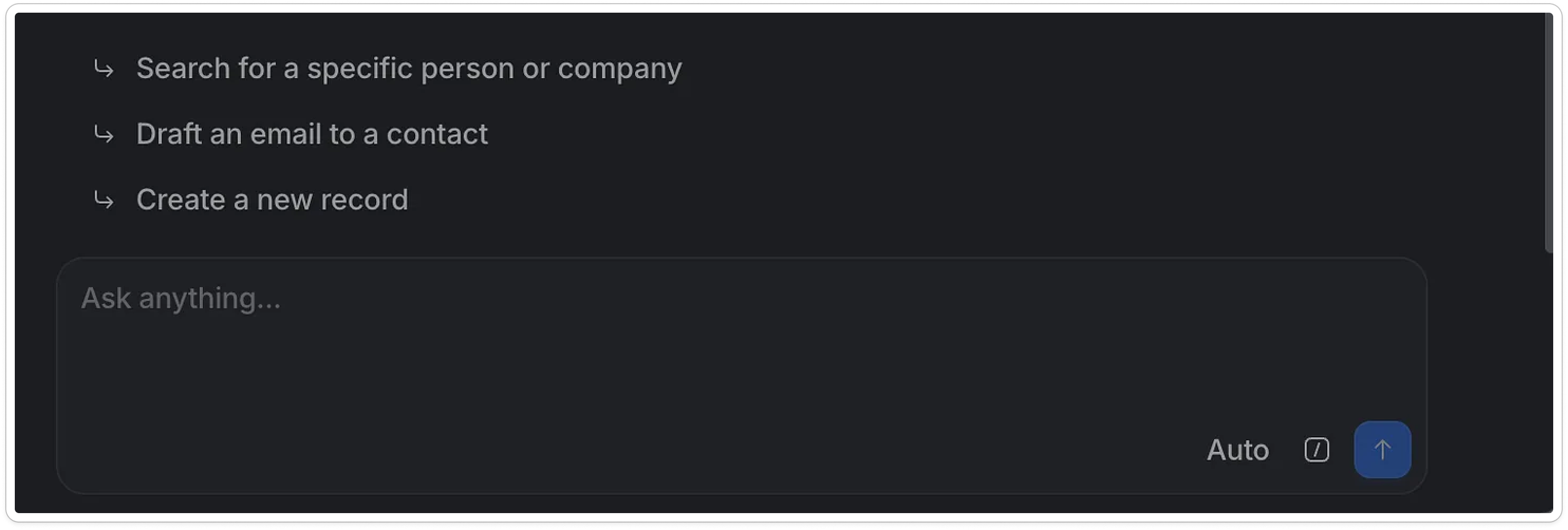
When Attio does these things for you, it’s leaning into a more agentic direction (completing tasks, not just giving information).
But, this only shows up later, once Ask Attio has built trust in the basics: that it understands your context, pulls in the right information, preps you properly.
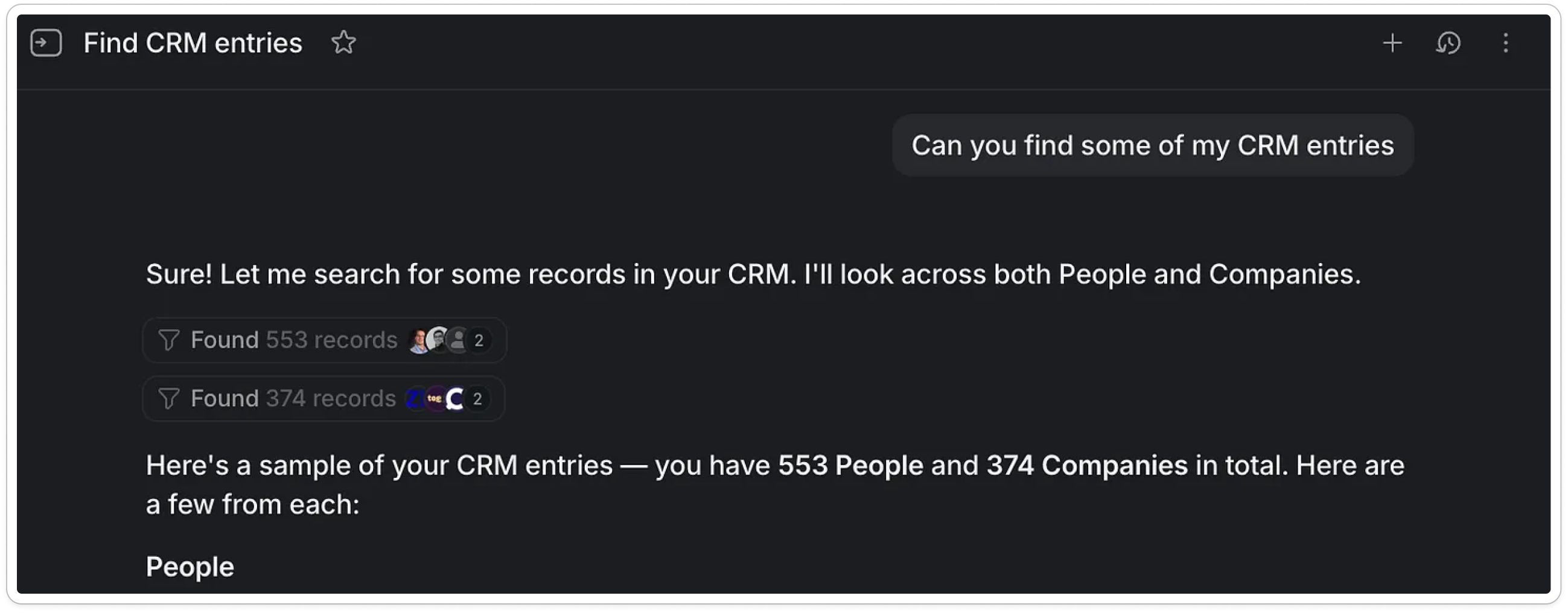
As a user, I can see that trust being built in the small details like the ‘thinking’ UI:
Let me search for some records in your CRM. I’ll look across both People and Companies.
Let me gather information about the meeting participants
Now let me search for any emails
I have enough information to put together the briefing
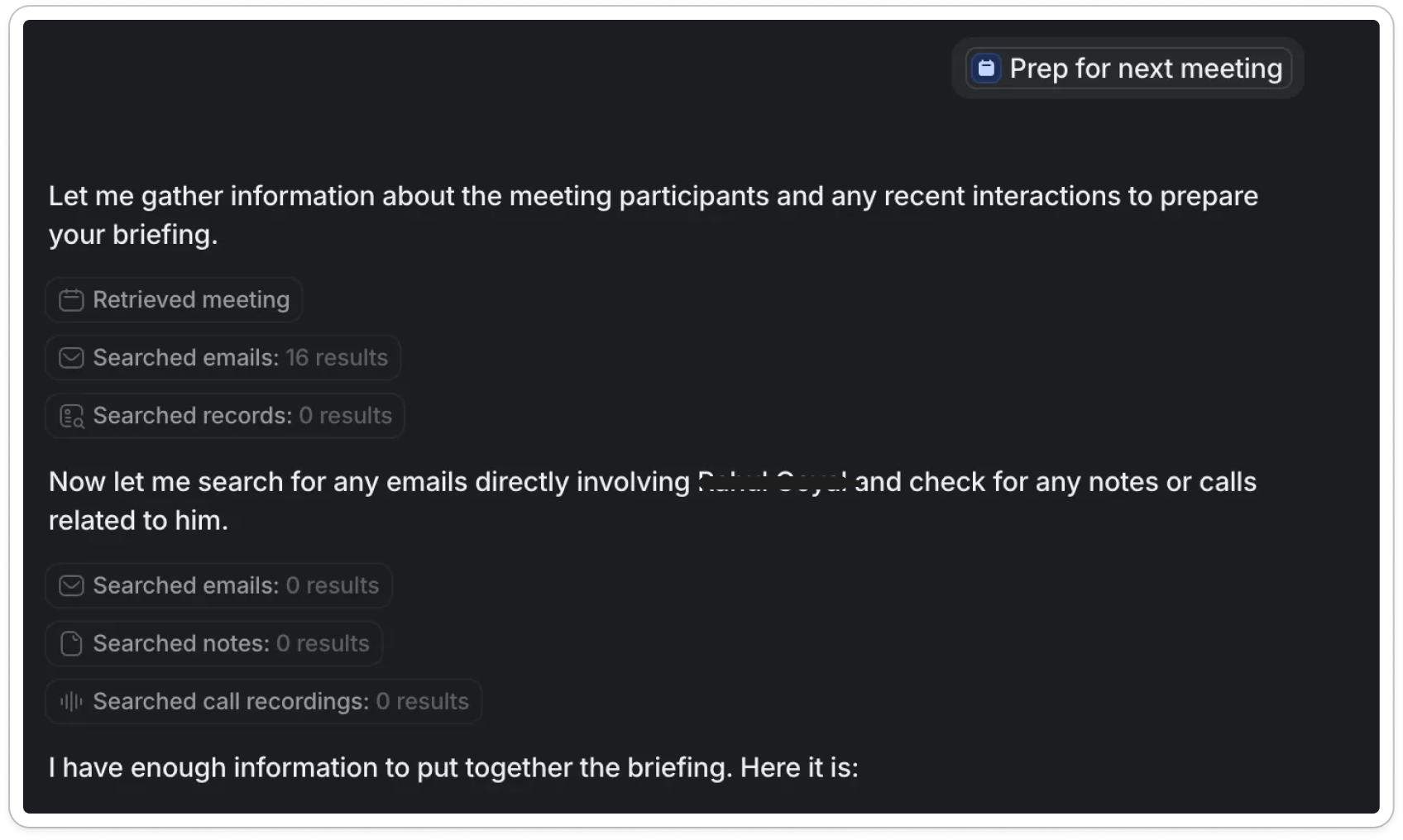
With each prompt, I:
See the full thought process
Have to wait for it to run through all it’s steps
Am told where it’s searched and why
I’m given the count of the number of results
I can see the tool’s assessment of whether it has enough information for me
This is thelabour illusion effect at work 🧠 When you can see the work being done, the system feels more reliable.
This trust building is especially important when you want to be automating more of a customer’s tasks in the future. Instead of throwing users straight in the deep end of automation, it’s built up slowly over time.
I come away from my first experience with Ask Attio so intrigued.
CRMs are already packed with stuff, how do you add more without adding to the mess?
The design debt of CRM tools
What struck me actually wasn’t the UI details of Ask Attio, it was that launching this sort of feature is really hard to do in a CRM.
CRMs have classically been some of the busiest interfaces.
They try to structure messy, human relationships into:
fields
stages
pipelines
objects
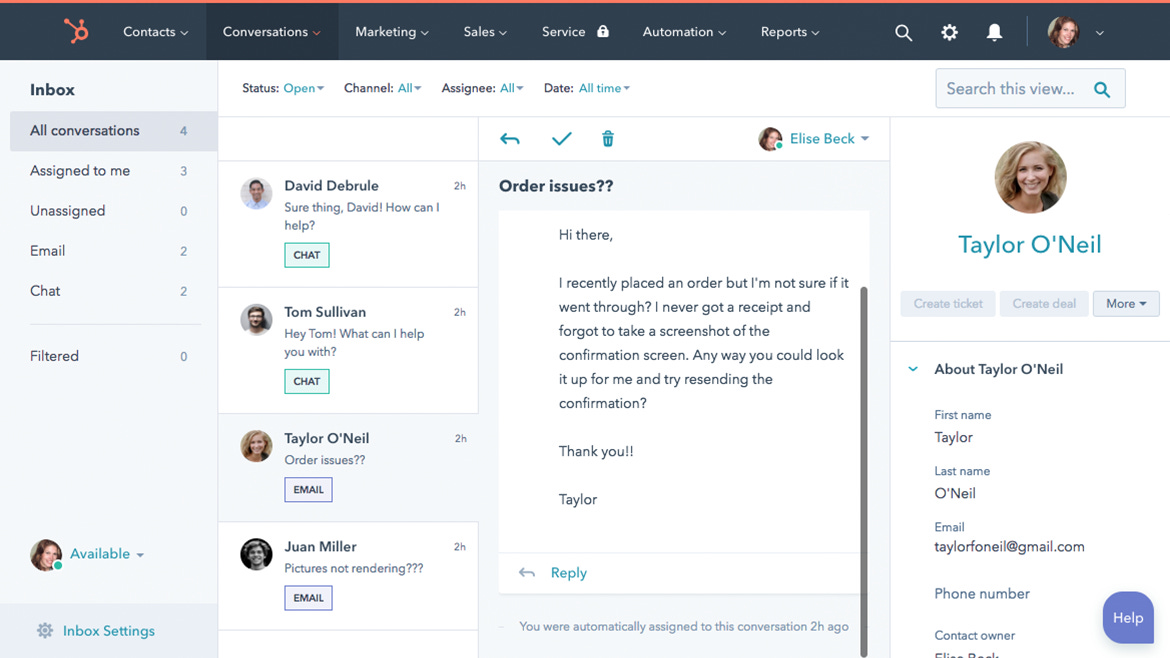
You end up with so much structure, parallel navigations, endless customization, visual onslaught.
Old CRMs face a huge design challenge: making something complex feel simple again.
And not just making it simpler: making it smarter.
In the pre-Ask Attio model, the entry point is the structure.
You go straight into a:
Contact list
Pipeline view
Company record
The person is still piecing together the information themselves, and analyzing where a deal is at.
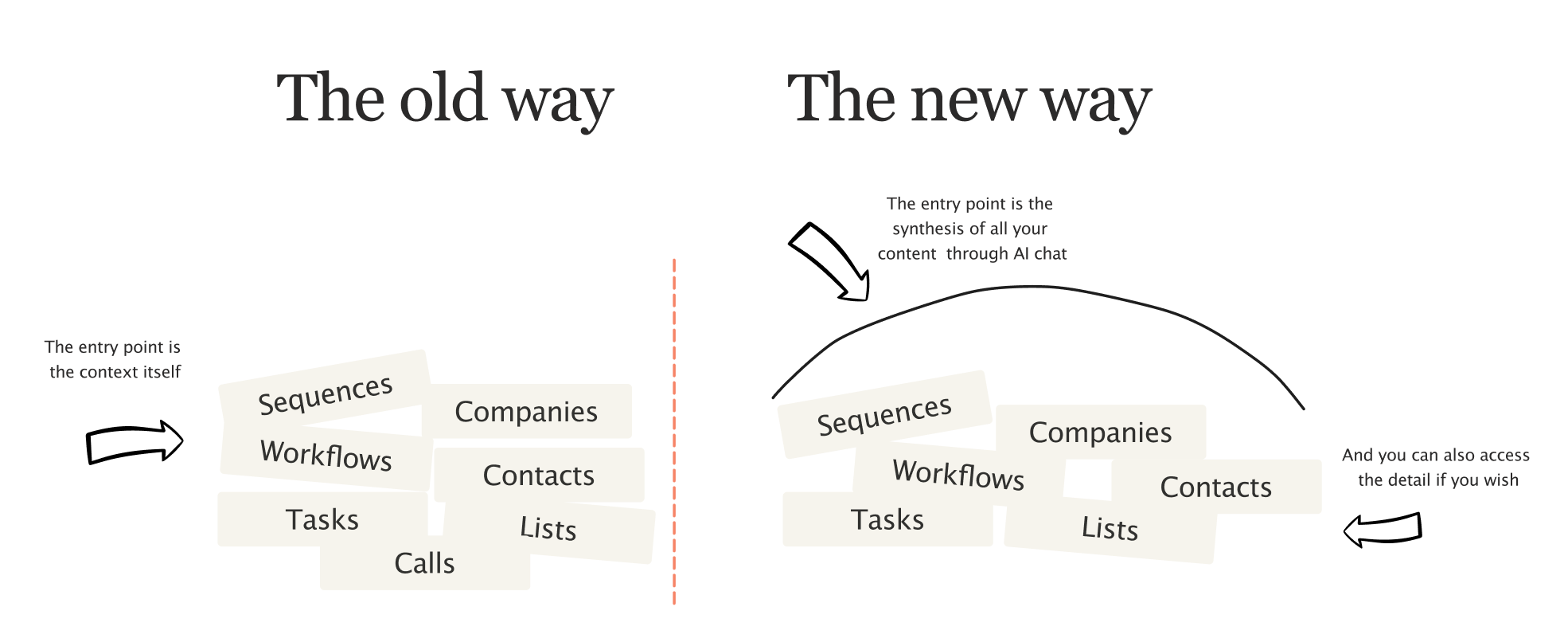
In the new model, the entry point is the question: you start with what you’re trying to do, and the CRM then pulls across your entire context to deliver that for you.
If you want to go deeper, the detail is still there (you can still go into the contact or the company). It’s just not where you start.
The challenge: work tools follow mental models 🧠
The problem is that people have been using clunky CRMs for decades.
You don’t open one expecting to type a question; you expect to click around, find a record, update a field.
That’s the mental model 🧠 You already know how it’s going to work before you even touch it.
When the stakes are high (revenue, income, million-dollar-deals), the appetite to try new things is lower. Customers are more likely to go for similar-looking tools.
That’s exactly what Attio did; they started with the expected model.
A CRM that looks like a CRM.
Familiar enough, but also clean, minimal and simple.
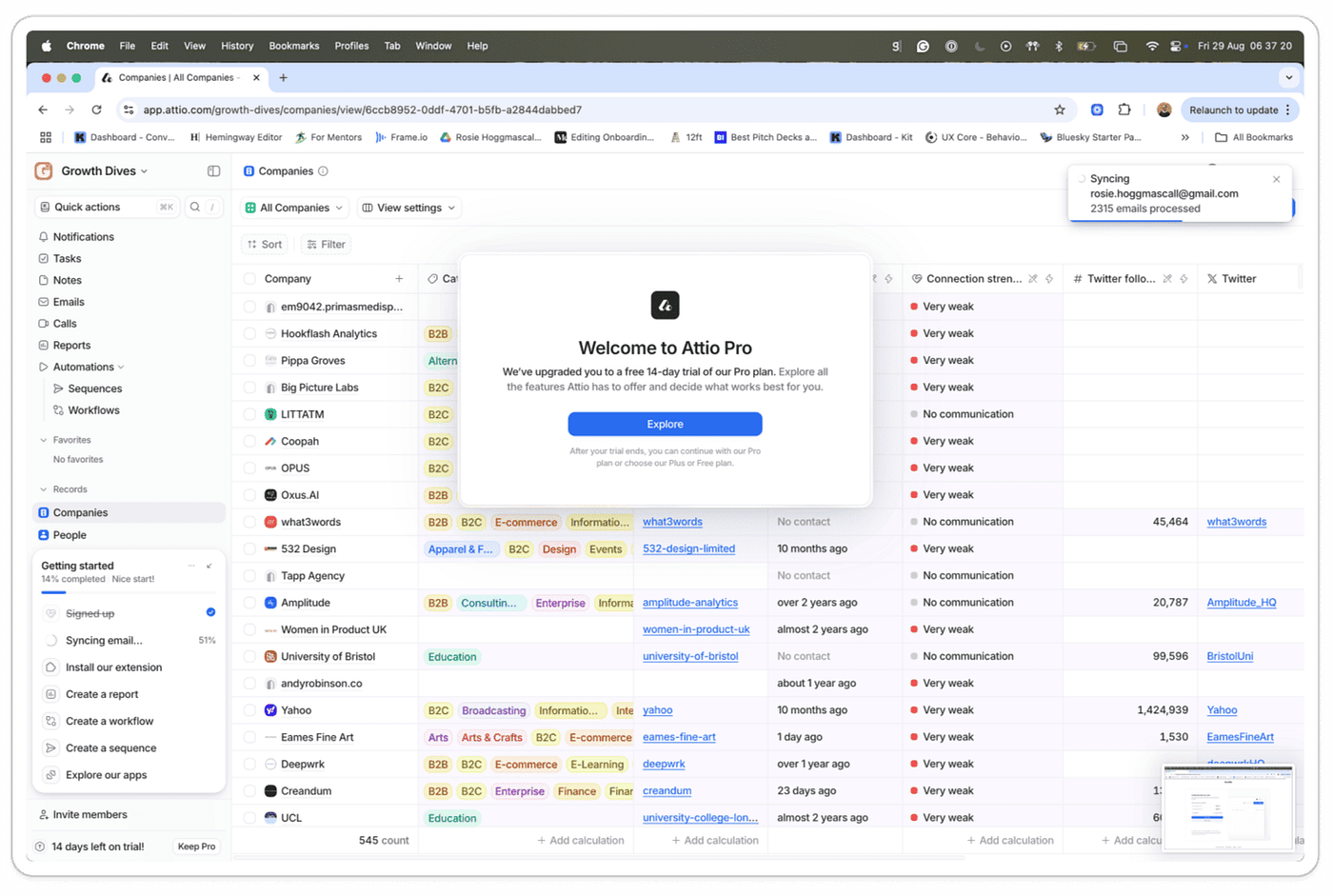
That was the ‘in’: a cleaner CRM that removes a lot of the manual work, and they’ve grown quickly off the back of it.
Last year Attio was one of the fastest growing startups in Europe:
Raised a $52m Series B
Reached over 5000 customers including the likes of Wispr Flow and Granola.
By starting with a familiar face, Attio built trust as a CRM.
Which buys them brand, customers and momentum to then pave the way for a smarter type of CRM - one where you go to ask questions, not just update fields.
In the old model:
The entry point is the detail
The user keeps everything in order
Data is entered, structured and maintained manually
Admin work is created
Entire roles exist to maintain the system
In the new model:
The user starts with a question, not a field
Interpretation and analysis becomes the starting point
Responsibility moves from the user maintaining the system to the system doing the work
The system pulls context together for you, but you can dive into the details if you wish
Seeing this, my previous way of thinking about AI product design doesn’t quite hold up.
What smarter CRMs tell us about designing AI products
Two weeks ago, I wrote about four ways AI products are being designed:

It made it feel like you had to pick one direction.
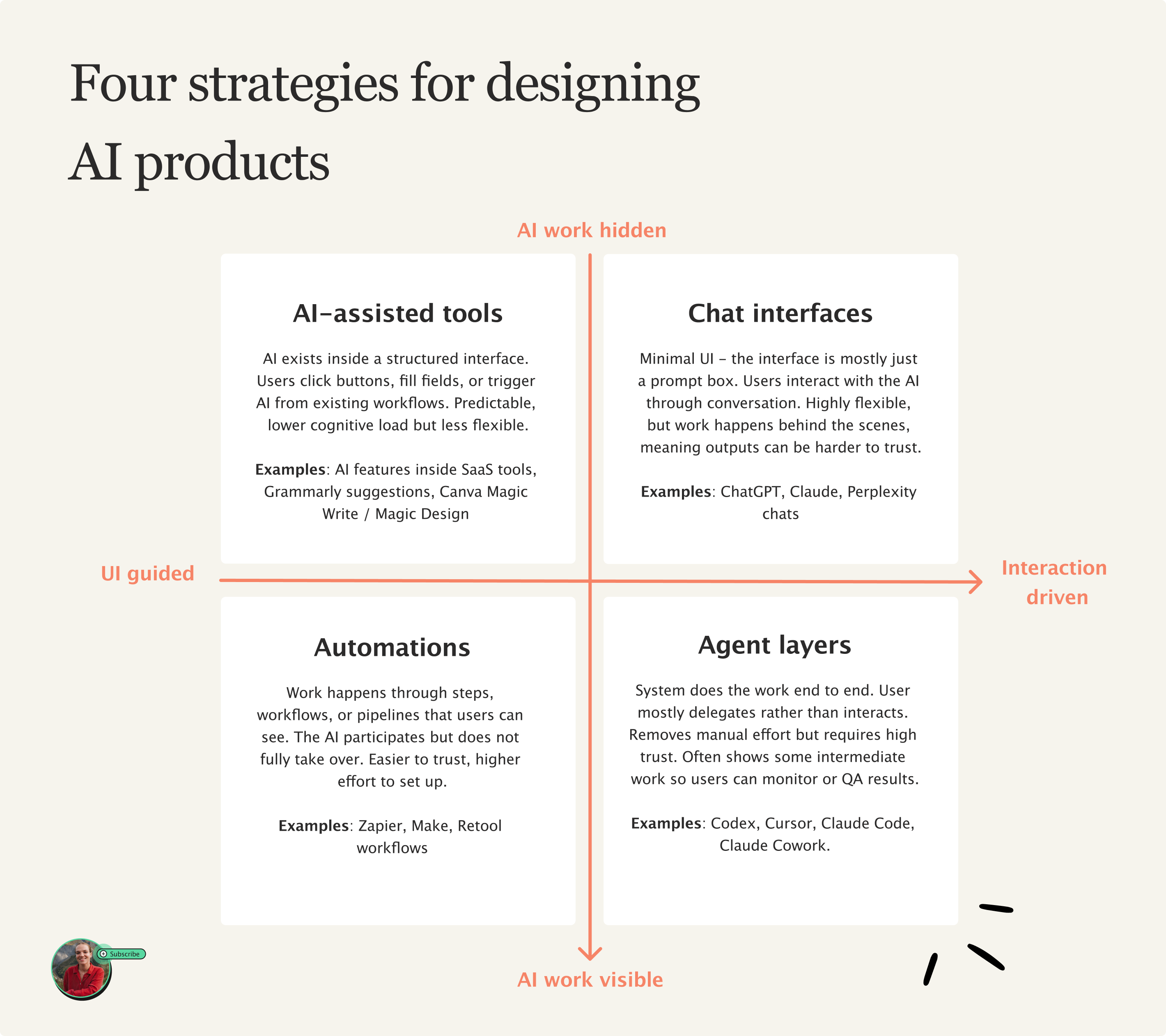
But looking at Ask Attio, that’s not quite what’s happening.
Ask Attio combines chat, UI, and actions in one experience.
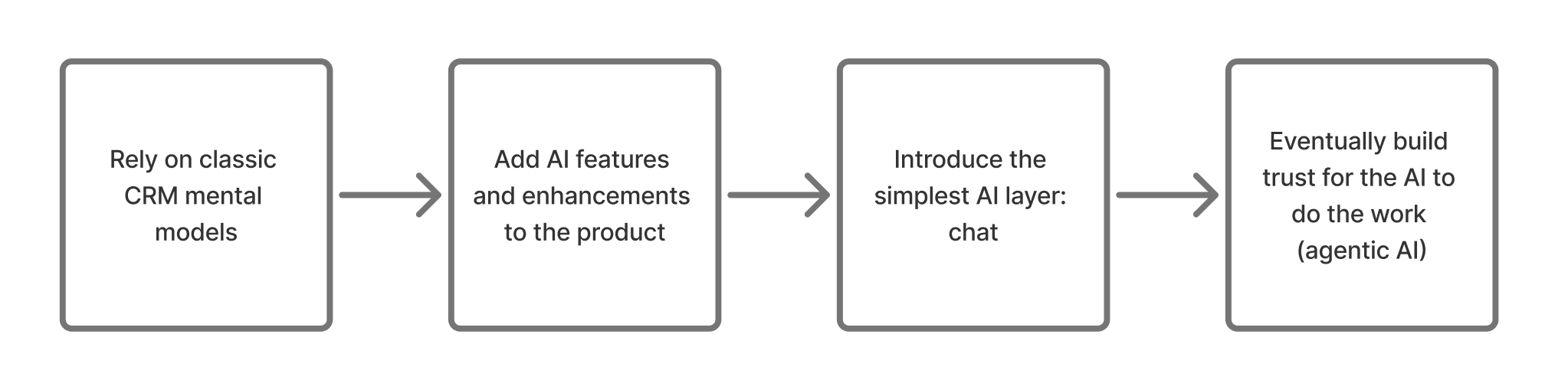
Designing AI products feels less like a matrix, and more like a timeline:
Start with what people know - a familiar UI, something tangible to trust and understand
Layer in AI - features, background work, assisting features but not taking centre stage
Introduce chat - a simple way to interact
Allow the system to act on your behalf - consent to actions taken for you
Ask Attio feels like stages 3 and 4 of this timeline, but stages 1 and 2 are still there in the contact view, company view and the classic parts of a CRM that exist in the navigation.
The most interesting part in my view is how UI is layered into the chat.
Ask Attio doesn’t just have natural language UX (words), it has buttons, default prompts, UI modules.
Instead of leaving you with a blank input, it gives you ready-made options.
This is so important because when a new mental model is introduced, especially one that moves away from familiar systems, the product needs to guide the user more actively so they don’t get stuck, they activate and they get to the aha! moment.
The big product question from a becomes:
How do you introduce a new way of interacting without overwhelming people?
The answer?
Ask Attio keeps familiar mental models in place and changes the starting point. It steps back and focuses on the customer jobs: closing deals.
Then works out how the information and context in the CRM can support that better.
And builds the interface around that, without getting stuck in the decades of CRM design debt that’s come before it.
In partnership with Attio. Thanks for the early sneak peek into the feature 🤟🏻
Thank you for your sharp analysis and for building upon your previous article. I'm right in the middle of building a new customer support interface and your work makes me reflect on what's best.